Common Core Algebra 2 Unit Reviews Unit 10
Good morn anybody. I'k writing today from my firm in Ruddy Claw, New York, only a hundred miles or so north of New York City. We've had three nor'easters in the concluding calendar week with another possible one next week. You lot might call this serious winter. We just call it March. And since it is mid-March, it'southward time to put out the eMath March Newsletter. We've got plenty to report and add-ons to discuss, so let'due south go to it.
This month for our Algebra I Add-Ons we bring you lot a new lesson in statistics. Unit x.Lesson four.5 is on the bailiwick of outliers, how to identify them and what the effect of removing them is on the statistics for a data set. Nosotros stick to the standard definition of an outlier being any data value ± 1.5IQR beneath or above the kickoff or third quartiles, respectively. On the New York State Regents Examination in Algebra I, we've repeatedly seen multiple choice test questions that require knowing this definition, for example #16 on the January 2018 exam:

To rule out (2) as the correct choice, think virtually how much piece of work must be done. They must calculate Q1 and Q3, 41 and 68, and so the IQR (27), and and then 1.5*IQR (xl.5). Subtracted and added to Q1 and Q3 gives you a "not-outlier" range of 0.five to 108.v. Notice how this makes the 120 clearly an outlier simply the data point of 0 is barely an outlier. And then, it's pretty important to know this technical definition of an outlier (which is not universally accepted) in order to non choose (ii). Given the rather subjective nature of the correct answer, i.e. (1) that the style is the "all-time" measure of primal tendency, information technology is important to know why each of the other statements is true. Don't get me wrong, I don't think it is unreasonable for kids to know this, simply I think that this is the type of curricular detail that needs to beexplicitly spelled out as a piece of knowledge kids must learn.
We created 2 new videos for Common Core Algebra I. 1 of them goes with our add-on lesson Unit eight.Lesson 7.five.Linear-Quadratic systems. We likewise did a short video on a graphical reason for why the method of completing the square works. Both of these videos volition be posted soon with a QR code added to the lesson when finished (likely today or Monday).
For Common Core Geometry, we have finally finished our Unit Reviews and Unit of measurement Assessments with Unit 10 – Measurement and Modeling. Nosotros accept a fantastic Review with lots and lots of modeling problems, including boosted density problems. These Reviews and Assessments finish Version 1 of our Common Cadre Geometry curriculum. We will begin releasing add together-ons (additional lessons, activities, and assessments) showtime in August of 2018.
For our Common Core Algebra II Add-Ons, we've created a lesson, a mid-unit quiz (grade B), and a video. Allow's offset off with Unit 11.Lesson 8.5.More Work Graphing Sine and Cosine. This is a huge set of problems that give kids basic work graphing the sine and cosine function including amplitude, midline, and frequency (no horizontal shifting). We also give them a variety of curves and have them come up with the equations. This is an excellent trouble set to give to kids over leap suspension (coming soon hopefully to a school near y'all). We also created a Form B of our Unit 11 (Trig) mid-unit quiz. We reposted the Class A quiz and you now have two like quizzes to test their cognition half-fashion through the Trigonometry (Round functions) unit. Finally, nosotros created a video to go with our Unit ten lesson on the Sum and Difference of Perfect Cubes. I must say I'one thousand disappointed that this topic got canonical for the Next Generation Learning Standards at the Algebra Ii level:
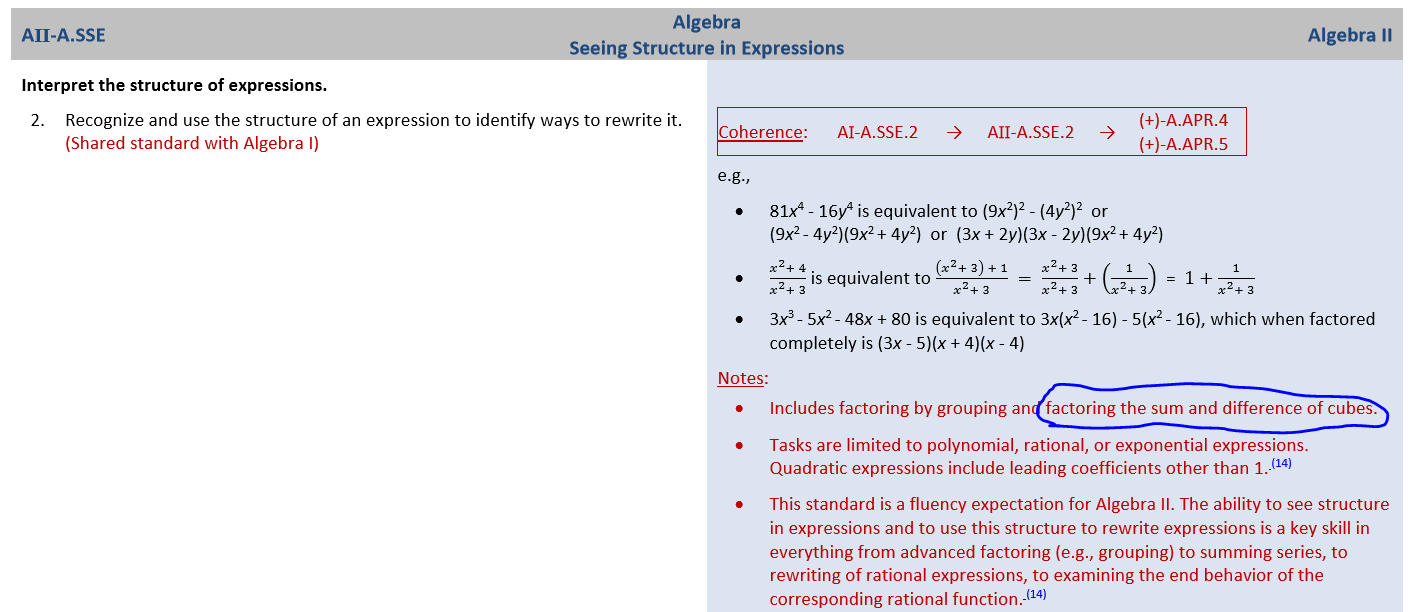
I observe near no utility in having kids memorize:
and
I do think they are interesting patterns to study. I think the connections that can be made between these problems and the imaginary roots of quadratics are quite interesting. Just, I see no utility in whatever type of realistic math problems where memorization of these patterns is helpful. I call back information technology merely takes upward time and mental space that could be spent better elsewhere. What are your thoughts?
Finally, nosotros have our Algebra 2 and Trigonometry add-on of the month. This calendar month we've added an additional lesson in Unit 10 (Exponential and Logarithmic Functions). Nosotros've put in Lesson four.five on Additional Exponential Modeling. In this lesson nosotros await at how to transition between dissimilar time units when modeling something using exponential growth and decay. This is a particularly dainty lesson from an applied perspective.
That's information technology for add-ons, only I'd like to keep discussing a bit more. Permit's begin with a cool 3D visualizing program for Geometry teachers that many of you probable accept if you bought a PC within the final 3 years. All Windows 10 computers (and I believe some Windows 8) come up with a plan called 3D Builder:

Just type its proper name into your Search bar on a PC to see if you have it. Now, this programme wasn't installed considering Microsoft thinks we are all Geometry teachers. Nope! This is a program designed to allow you lot to create 3D printer files. But, that doesn't mean it isn't dandy for 3D modeling. For example, call back the water-tower trouble on the kickoff CC Geometry Regents exam:
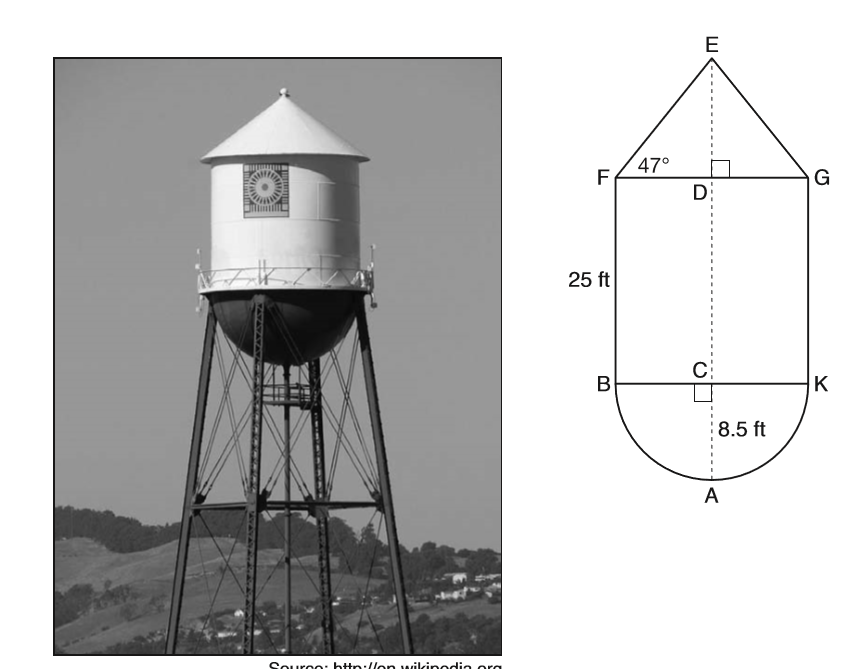
Now, imagine making the problem come live by showing the students non just a model of information technology on 3D Builder merely also that model taken apart into the iii component pieces:

One of my favorite parts of this program is its Split control nether the Edit Menu:
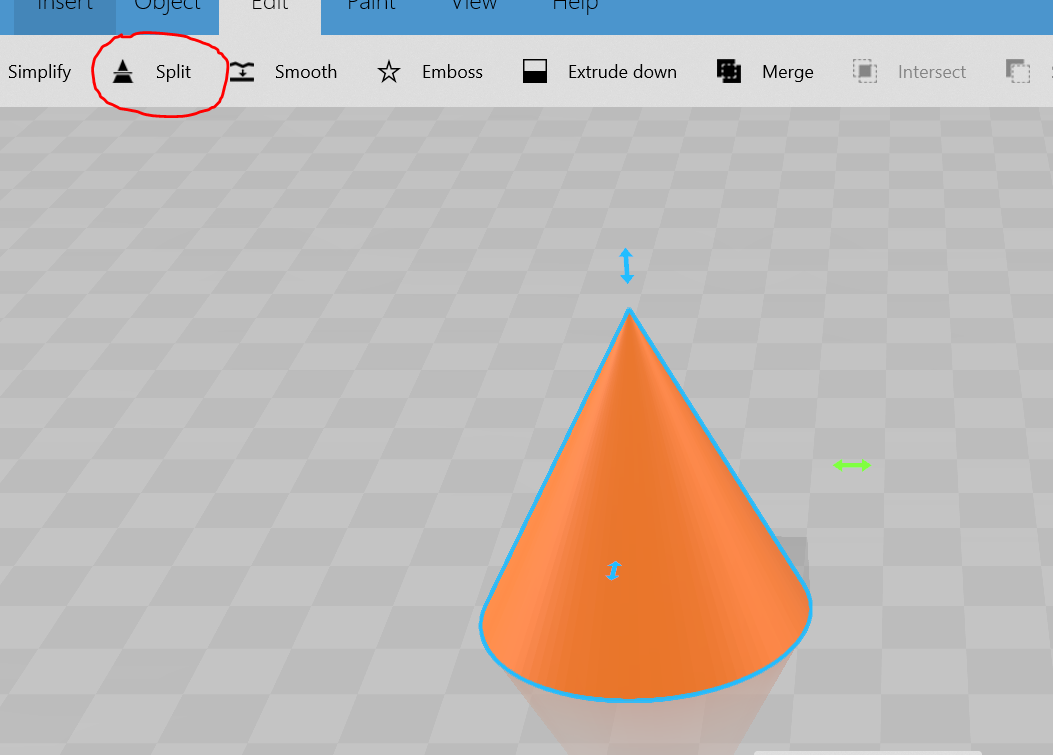
This office'south purpose is to slice a 3D object using a plane so that you lot merely keep part of it to print. BUT, Geometry teachers tin can use it to evidence kids cross-sections of any orientation. With our cone example, here is an example of it showing a horizontal cantankerous-section:
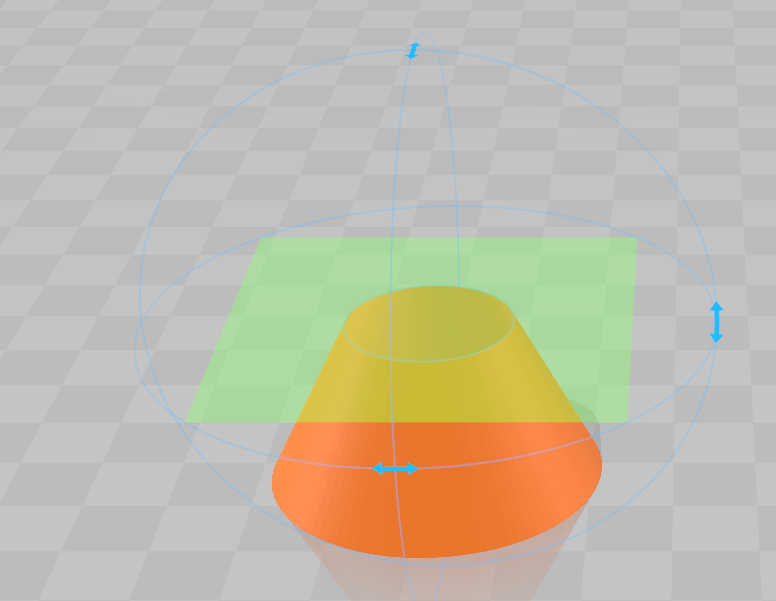
Notice those rotation arrows? They allow you lot to rotate the slicing plane into whatsoever orientation. And then, if you wanted to see a classic vertical cross-section yous could but rotate the plane 90 degrees to go:
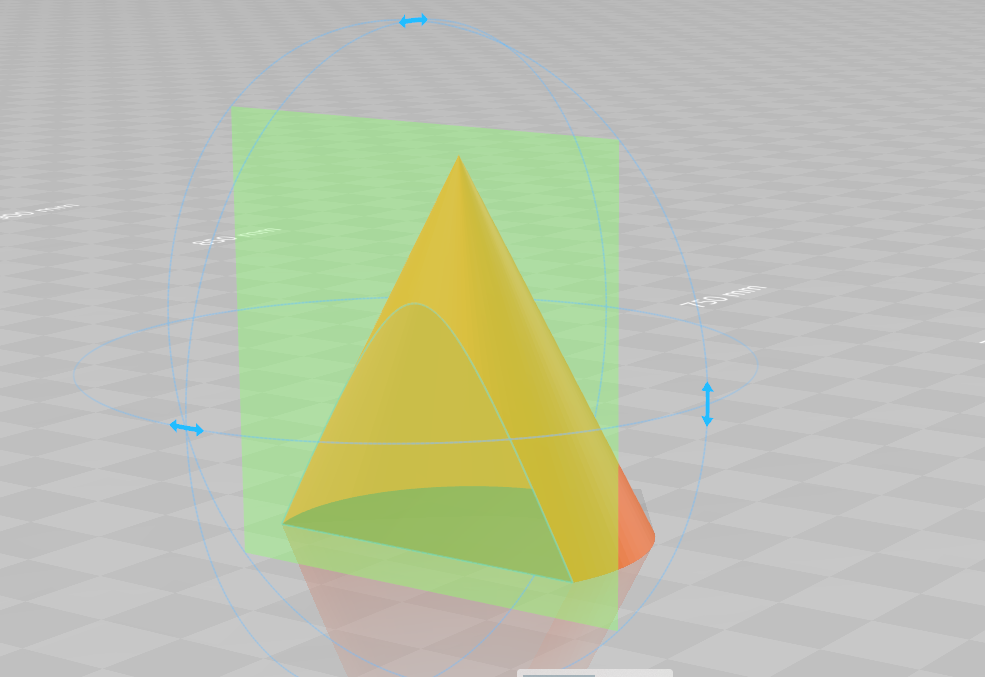
Or, my favorite, the elliptical cross-section formed when slicing with an inclined plane:
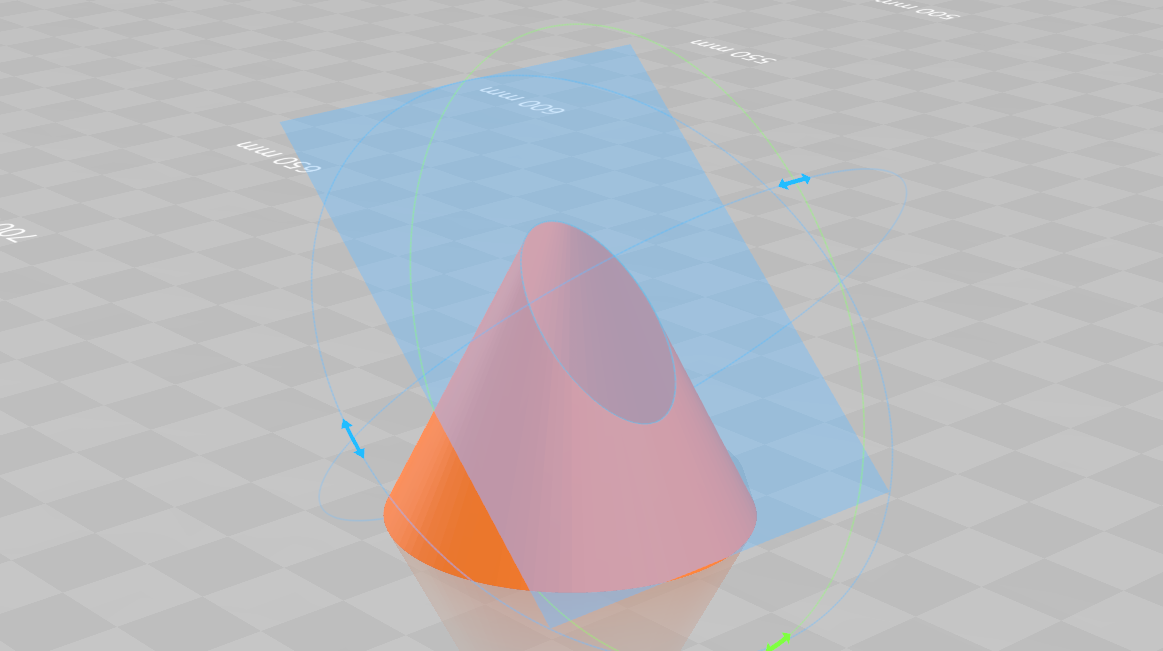
Once you've rotated the aeroplane, yous can then movement it left, right, up and down, allowing you to bear witness kids how cross sections can change as you lot move the slicing aeroplane in various directions. The Adjacent Gen standards for Geometry state that kids will demand to be able to visualize cross-sections of mutual solids, even with planes that are not horizontal or vertical:

Will they have to recognize that certain cross-sections of cubes are hexagons? Inquiring minds desire to know.
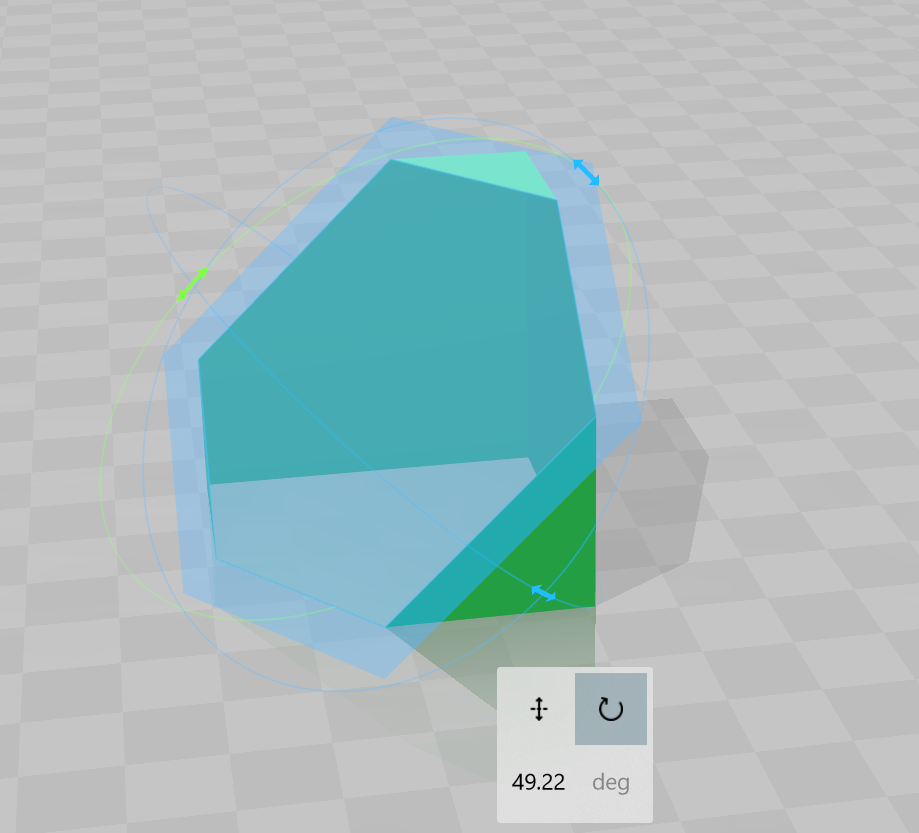
Well, I remember that'south near it for 3D Architect. I'll exist discussing this plan and Tinkercad, one of my favorite online 3D modeling programs in additional posts. Only a few years ago, visualizing 3D geometric concepts would have been very difficult. At present, programs to do so are not just easy to find, but completely free.
We have some exciting changes coming to the website in the coming months, including a new way of organizing the Add-Ons and the Assessment Items. But, more on that in the April newsletter. For now, happy Pi-Day, happy March, and savor your spring intermission if you nonetheless haven't been on information technology yet.
Source: https://www.emathinstruction.com/emath-march-2018-newsletter/
0 Response to "Common Core Algebra 2 Unit Reviews Unit 10"
Post a Comment